
Shopping Cart
Buy £100.00 more to enjoy FREE Shipping
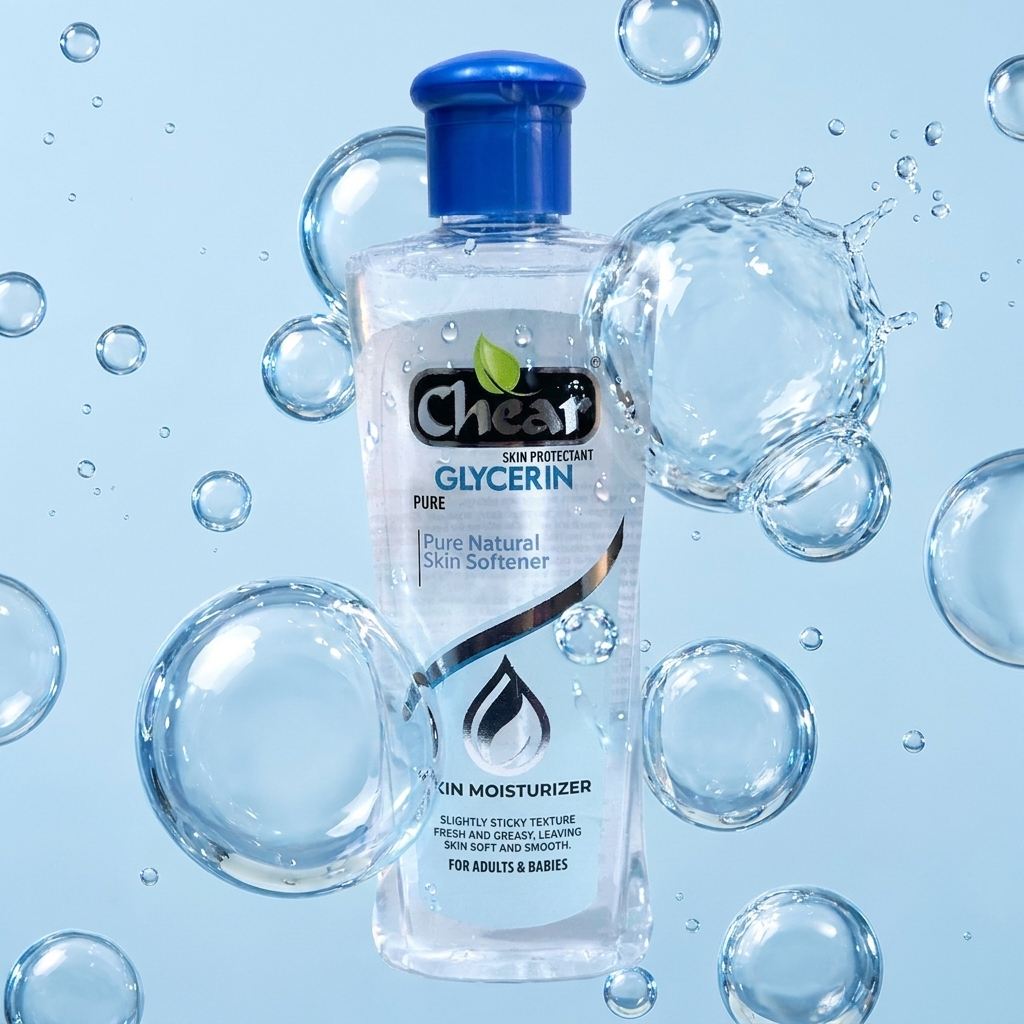
Glycerin has become one of the most trusted ingredients in modern skincare routines. People turn to it because it delivers reliable hydration without complexity. At the heart of its appeal sits a simple yet highly effective action: glycerin is a humectant that attracts moisture to the skin’s surface and helps keep skin feeling soft and comfortable. When that glycerin is pharmaceutical grade and pure, as in Chear Glycerin Skin Moisturiser, the results become even more consistent and gentle.
In this research-backed guide, we explore exactly what glycerin is, the scientific mechanisms that make it popular, and why a pure glycerin skin moisturiser such as the Chear formulation stands out for everyday use.
Glycerin (also called glycerol) is a trihydroxy alcohol, a clear, odourless, viscous liquid that occurs naturally in the body and can be produced from plant or animal sources. In skincare, it functions primarily as a humectant. This means it draws water molecules towards itself from both the deeper layers of the skin and, under suitable conditions, from the surrounding air.
Endogenous glycerin is already present in healthy skin. It is generated partly through the breakdown of triglycerides in sebaceous glands and is transported via aquaporin-3 channels. Research published in the British Journal of Dermatology highlights that this natural glycerin contributes to stratum corneum hydration, cutaneous elasticity and epidermal barrier repair.
When we apply glycerin topically, we are essentially topping up a substance the skin already recognises and utilises. Consequently, pharmaceutical grade glycerin integrates smoothly without introducing unnecessary additives.
The outer layer of the skin, the stratum corneum, relies on a precise balance of water and lipids to remain flexible and intact. Dry environments, frequent washing, ageing or skin conditions can deplete this balance. Glycerin intervenes in several complementary ways.
First, its hygroscopic nature pulls water into the stratum corneum. Studies using synchrotron X-ray diffraction have shown that glycerol solutions help maintain the hydrated state of corneocytes for longer periods during drying. In addition, glycerin influences the organisation of intercellular lipids, supporting the orthorhombic packing that contributes to barrier integrity.
Second, glycerin accelerates barrier recovery after disruption. Classic work by Fluhr and colleagues demonstrated that topical glycerol speeds the restoration of barrier function following tape-stripping or surfactant damage, measured by reduced transepidermal water loss (TEWL). The effect persisted even days after application ended, indicating more than simple surface moisture.
Third, glycerin supports the natural moisturising factor and can increase filaggrin expression when combined with other polyols. A 14-day study in volunteers with dry skin found that a formulation containing glycerol improved skin hydration, reduced TEWL, elevated the interdigitation index and increased filaggrin protein quantity.
Taken together, these actions explain why glycerin keeps skin feeling soft and comfortable: it both attracts moisture and helps the skin retain and utilise that moisture more effectively.
Multiple clinical and laboratory studies confirm glycerin’s benefits across different skin types and conditions.
In patients with atopic dermatitis, a placebo-controlled trial of a 20% glycerol emollient showed significant improvement in stratum corneum hydration and restoration of epidermal barrier function compared with the vehicle alone.
Longer-term application of high-concentration glycerol (20%) has also been linked to improved skin elasticity and reduced visibility of crow’s-feet wrinkles. A computational and clinical study found that the softening effect on the stratum corneum reduced compressive stress beneath wrinkles, with measurable gains in hydration and elasticity after two and four months.
Glycerin further demonstrates protective effects against irritants and supports faster wound-healing processes. Review articles note its ability to inhibit lipid phase transitions in the stratum corneum under low humidity, enhance desmosomal degradation (aiding orderly desquamation) and even exert mild antimicrobial activity.
Importantly, these benefits appear at concentrations commonly used in leave-on products. Pure glycerin can be applied neat (in small amounts) or diluted, giving users flexibility that multi-ingredient creams sometimes lack.
Not all glycerin products deliver the same experience. Many commercial moisturisers contain glycerin at low percentages alongside emulsifiers, fragrances, preservatives or silicones. While these can feel elegant, they may dilute the core humectant benefit or introduce potential irritants for sensitive skin.
💧 Chear Glycerin Skin Moisturiser – offers pharmaceutical grade purity. It contains only pure glycerin, free from additives and chemicals. This purity delivers several practical advantages:
Because the formula is so simple (vegetable glycerin and water only), users can control exactly how much moisture they introduce. Moreover, pure glycerin remains non-comedogenic when used appropriately, making it suitable even for acne-prone skin that needs hydration without pore-clogging agents.
In short, a well-formulated glycerin skin moisturiser removes the variables that can reduce efficacy or cause reactions in more complex products. It focuses on the ingredient whose performance is most thoroughly documented in the scientific literature.
Dry and dehydrated skin
Glycerin rapidly increases corneometer readings of hydration. Single applications of glycerin-based products have produced statistically significant improvements lasting 24–48 hours in people with moderate dryness.
Barrier-compromised or irritated skin
By reducing TEWL and stimulating repair pathways, glycerin helps skin recover from environmental stress, frequent hand-washing or mild chemical exposure.
Ageing skin
Improved hydration softens the stratum corneum, which can make fine lines less apparent and support elasticity over time.
Sensitive and atopic skin
Clinical trials in atopic dermatitis demonstrate that glycerol-based emollients enhance hydration without aggravating inflammation. Many formulary guidelines in the UK note glycerin’s usefulness in emollients for contact dermatitis and dry skin conditions.
Lips, elbows, knees and heels
These areas experience greater friction and environmental exposure. A thin layer of pure glycerin provides targeted, long-lasting softness.
For best results, apply the product to clean, slightly damp skin. The residual water gives the humectant immediate moisture to attract and hold. Massage a small amount in circular motions until absorbed.
Alternatively, add a few drops to your regular moisturiser or lotion to create a custom glycerin-boosted formula. Some users dilute it with a little water or rosewater for a lighter serum-like texture.
Use morning and evening, or as needed on particularly dry patches. Store the bottle in a cool place away from direct sunlight. Because the product is pure, a 200ml bottle lasts a long time even with daily use.
Glycerin enjoys an excellent safety record. The Cosmetic Ingredient Review Expert Panel has concluded that glycerin is safe in cosmetics at current use concentrations. It is generally recognised as non-irritating, non-sensitising and suitable during pregnancy. Undiluted concentrations on already compromised skin may feel sticky or attract environmental particles; therefore, a light application or dilution is recommended for facial use in humid, dusty environments.
Glycerin remains popular in skincare for clear, evidence-based reasons. As a humectant, it attracts moisture to the skin’s surface, supports barrier function, accelerates recovery after disruption and leaves skin feeling soft and comfortable. Decades of research in dermatology journals confirm these effects across healthy and compromised skin.
When the glycerin is pharmaceutical-grade and free from additives, as in Chear Glycerin Skin Moisturiser, users gain the full benefit of the ingredient without unnecessary extras. This glycerin skin moisturiser offers a straightforward, versatile and scientifically supported way to maintain hydration every day. It’s formulated with clean ingredients – vegetable glycerin and water – making it the perfect go-to product for instant hydration and moisture.
Whether you are dealing with seasonal dryness, sensitive skin or simply want a reliable hydration step, Chear glycerin continues to prove its value.
Explore the Chear Pure Glycerin B.P. Skin Moisturiser and experience the difference that focused, research-backed purity can make.



Chear Beauty @ Sonik Products Ltd | Company No: 3184821
Chear Beauty @ Sonik Products Ltd, Block C, Woodside End, Wembley Alperton, Middlesex HA0 1UR
No results found. Please try another keyword.
| Subtotal | £0.00 |
|---|---|
| Total | £0.00 |
Don't have an account yet? Sign up for free
Please enter your username or email address. You will receive a link to create a new password via email. Remember now? Back to login
Already have an account? Log in