
Shopping Cart
Buy £100.00 more to enjoy FREE Shipping
Achieving washed, refreshed, radiant-looking skin often comes down to the right combination of ingredients. When papaya extract meets lactic acid, the result is a gentle yet highly effective approach to cleansing, exfoliating and brightening. This pairing, often called the papaya lactic acid brightening approach, supports smoother texture, more even tone and a luminous complexion without the harshness of stronger chemical peels.
Papaya (Carica papaya) has long been valued in traditional and modern dermatology for its proteolytic enzyme, papain. Papain selectively breaks down keratin proteins in dead surface cells, facilitating gentle enzymatic exfoliation.
Furthermore, research shows that papaya fruit and leaf extracts exhibit tyrosinase-inhibitory activity, which can help reduce melanin production and support a brighter appearance. One screening study of herbal extracts identified Carica papaya as having strong tyrosinase inhibition (54.5%), ranking second only to licorice root among the plants tested. Ethanol extracts of the fruit also demonstrated antioxidant capacity, measured by DPPH assay.
In addition, papain and related proteolytic enzymes mimic the skin’s natural desquamation process. A comprehensive review in the Journal of Cosmetic Dermatology confirmed that enzymes such as papain can improve skin surface characteristics through controlled protein hydrolysis, with formulation factors such as pH and stabilisation being critical for activity and tolerability.
Papaya extracts also contain flavonoids, carotenoids and vitamins that provide antioxidant support. These compounds help neutralise free radicals generated by environmental stress, thereby contributing to a more refreshed and even-looking complexion over time. Consequently, papaya extract offers both immediate surface refinement and longer-term protective benefits.
Lactic acid is a naturally occurring AHA found in the skin’s own natural moisturising factor. Its larger molecular size compared with glycolic acid means it penetrates more slowly and remains closer to the surface, making it particularly suitable for sensitive or reactive skin.
Clinical studies have established lactic acid as an effective peeling agent for hyperpigmentation. In a key trial, pure lactic acid (92%, pH 3.5) used in serial peels produced marked improvement in melasma severity, measured by the Melasma Area and Severity Index (MASI). All patients who completed the protocol showed statistically significant improvement, and no side effects were recorded.
Moreover, lactic acid inhibits tyrosinase activity in a dose-dependent manner and promotes epidermal desquamation, dispersing melanin in the basal layer. A recent review of lactic acid chemical peeling summarised these dual mechanisms: direct enzyme inhibition and enhanced cell turnover that lifts pigmented corneocytes.
Beyond brightening, lactic acid stimulates ceramide synthesis and acts as a humectant, supporting barrier function while it exfoliates. Therefore, it delivers smoother texture and improved hydration alongside visible radiance, an advantage over many other AHAs that can feel drying.
The true strength of the combination lies in complementary modes of action. Papain performs selective enzymatic digestion of surface proteins, while lactic acid weakens intercellular bonds through mild acidification and calcium chelation. When used together in a cleansing format, the enzyme initiates gentle protein breakdown and the AHA completes the loosening of residual corneocytes.
In practice, this dual approach yields more thorough yet still comfortable removal of dull surface cells. Recent formulation research on acid enzyme complexes (including papain with hydroxy acids) has demonstrated enhanced in vitro keratin removal and clinically measurable improvements in gloss, smoothness and pore appearance after four weeks. Although those studies used different acid partners, the principle of synergistic exfoliation remains relevant.
Furthermore, the mild nature of both ingredients reduces the risk of irritation that can accompany stronger single-agent peels. As a result, the papaya lactic acid brightening pairing is well suited to regular use as a cleansing step, leaving the skin optimally prepared for subsequent brightening serums or treatments.
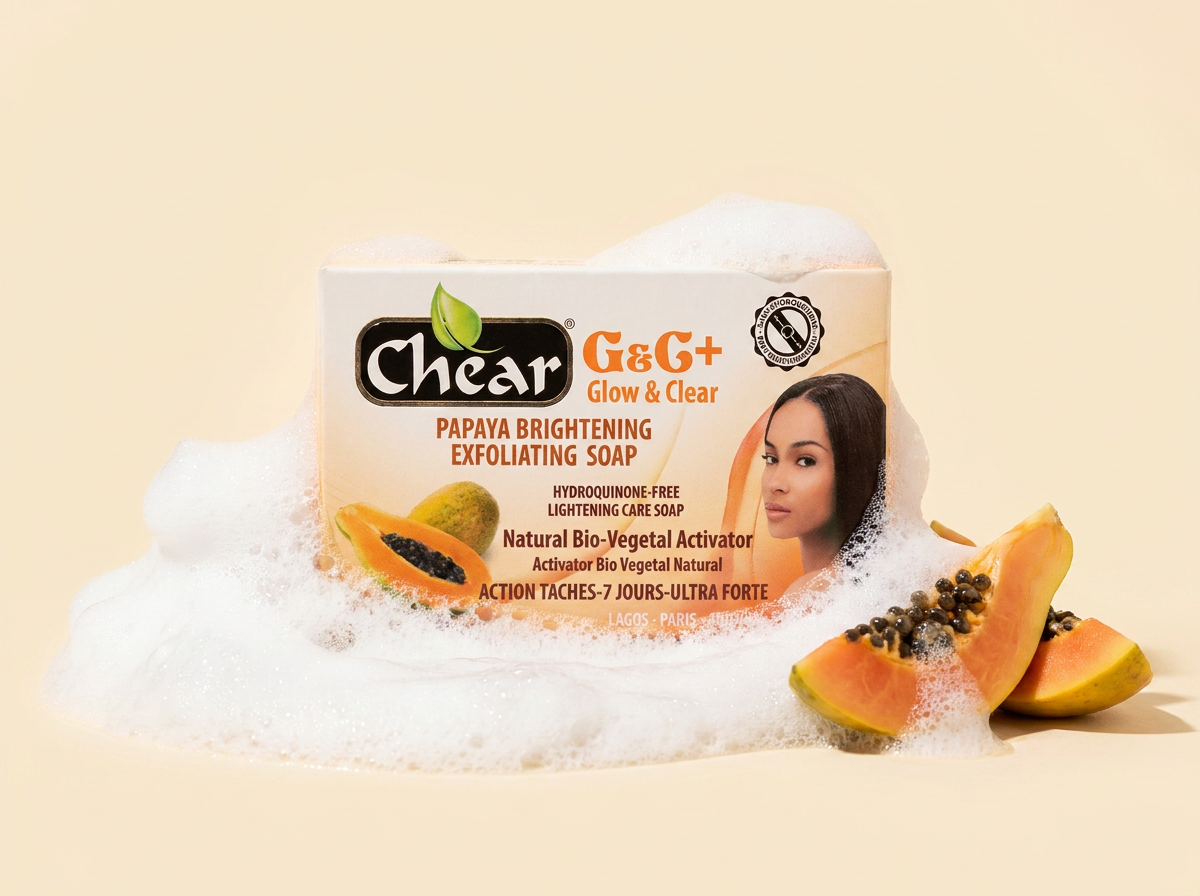
A well formulated soap or cleanser that combines both actives offers a convenient daily or every-other-day step. The Chear Papaya Brightening Exfoliating Soap is designed specifically as a cleansing base that harnesses papaya extract and lactic acid, delivering:
To use: wet the face, work the product into a light lather, massage gently for 30–60 seconds, then rinse thoroughly. Follow immediately with a hydrating toner or serum and always finish daytime routines with broad-spectrum sunscreen, because freshly refined skin is more photosensitive.
Because the combination is mild, many users tolerate it as part of a consistent regimen. However, those with very sensitive or compromised barriers should introduce it gradually and monitor for any transient redness. Patch testing remains good practice with any new active product.
The mechanisms and clinical outcomes described above rest on peer-reviewed literature rather than marketing claims alone. Proteolytic enzymes, including papain, have been reviewed for their ability to mimic physiological desquamation and improve surface characteristics. Papaya extracts demonstrate measurable tyrosinase inhibition and antioxidant activity in controlled extraction studies. Lactic acid produces statistically significant reductions in MASI scores for epidermal melasma with an excellent safety profile, and broader reviews confirm pigment-lightening effects via both tyrosinase inhibition and enhanced desquamation.
While both actives are generally well tolerated, individual responses vary. People with known latex or papaya allergies should exercise caution, as cross-reactivity is possible with papain. Likewise, those using prescription retinoids or other strong exfoliants should space applications to avoid over-exfoliation.
In addition, consistent sun protection is essential. The temporary increase in surface cell turnover can make the skin more susceptible to UV-induced pigmentation if sunscreen is omitted.
Overall, the papaya lactic acid brightening approach offers a balanced, research-supported route to smoother, brighter-looking skin that fits comfortably into most routines.
Papaya extract and lactic acid together deliver a compelling combination of enzymatic refinement and gentle AHA action. The result is cleaner, smoother skin with improved radiance and a reduction in the appearance of dark spots – precisely the outcomes many seek from a brightening regimen.
By using this pairing as a cleansing base, the skin is optimally prepared for leave-on treatments, maximising the benefits of the entire routine. Backed by journal evidence on both individual ingredients and their complementary mechanisms, the combination stands as a superior, science-aligned choice for those pursuing refreshed, radiant-looking skin.
Related reading: Unlock Papaya Cleansing Soap Benefits for Even, Clean Skin



Chear Beauty @ Sonik Products Ltd | Company No: 3184821
Chear Beauty @ Sonik Products Ltd, Block C, Woodside End, Wembley Alperton, Middlesex HA0 1UR
No results found. Please try another keyword.
| Subtotal | £0.00 |
|---|---|
| Total | £0.00 |
Don't have an account yet? Sign up for free
Please enter your username or email address. You will receive a link to create a new password via email. Remember now? Back to login
Already have an account? Log in