

Shopping Cart
Buy £100.00 more to enjoy FREE Shipping
In today’s fast-paced world, where environmental stressors and lifestyle demands take a toll, maintaining optimal skin health often falls by the wayside. However, one fundamental aspect remains constant: the need for adequate hydration. Skin moisture at every age is not just a beauty mantra but a scientific necessity that supports the skin’s barrier function, resilience, and vitality. As we progress through life stages, from youth to maturity, our skin undergoes inevitable changes, making consistent hydration a cornerstone of any effective skincare routine. This blog delves into the reasons behind these changes, the telltale signs of dehydration, the transformative benefits of regular moisturisation, and why collagen-rich formulations stand out for those battling dry, ageing, or stressed skin.
Moreover, by incorporating evidence from peer-reviewed studies, we’ll highlight how simple habits can yield profound results. Whether you’re in your twenties, navigating urban pollution or in your fifties addressing hormonal shifts, understanding skin moisture at every age empowers you to make informed choices for radiant, healthy skin.
As the years pass, the skin’s ability to retain moisture naturally diminishes, triggering a cascade of structural changes. Research indicates that, from around age 25, skin metabolism slows, with collagen and elastin production declining by approximately 1% per year. This gradual reduction contributes to thinner, drier skin, exacerbated by hormonal fluctuations, particularly post-menopause in women, where estrogen decline accelerates dryness and loss of elasticity. Additionally, the stratum corneum, the outermost layer, loses its capacity to hold water, dropping from 10-20% in youthful skin to below 10% in mature skin.
Environmental factors compound this intrinsic ageing process. Ultraviolet (UV) exposure, for instance, breaks down collagen and elastin, while indoor heating and pollution further deplete moisture reserves. Studies from the National Institute on Ageing underscore that, with advancing age, the epidermis thins, becoming paler and less elastic, making it more prone to fragility and dryness. Hyaluronic acid, a key molecule for water retention, decreases by about 6% every decade, halving by age 50. This loss not only affects hydration but also impairs the skin’s barrier function, leading to increased transepidermal water loss (TEWL) and increased vulnerability to irritants.
Furthermore, chronic conditions like diabetes or kidney disease, which are more prevalent in older adults, can manifest as dry, itchy skin. A systematic review highlights that these age-related alterations result in clinical manifestations such as wrinkles, pigmentation changes, and reduced elasticity, emphasising the interplay between biological and external influences. Therefore, recognising this natural progression is the first step toward proactive care, ensuring that skin moisture remains a priority at every age to mitigate these effects.
Identifying dehydration early can prevent it from escalating into more severe issues. Common indicators include a dull, lacklustre complexion, where the skin appears tired and uneven. Tightness, especially after cleansing, signals insufficient water content and is often accompanied by itchiness or discomfort. Flakiness or a rough texture can develop when the skin struggles to maintain its barrier function, leading to scales or cracks.
Medical research, including the American Academy of Dermatology, notes that excessively dry skin may lead to more noticeable fine lines, redness, and irritation. Darker under-eye circles and prominent shadows indicate dehydration’s impact on the delicate areas around the eyes. In some cases, conditions like eczema or psoriasis worsen, with outbreaks linked to low hydration levels. A study in Physiological Reviews notes variations in hydration associated with disorders such as atopic dermatitis, in which the skin loses water excessively.
Moreover, dehydrated skin can paradoxically appear oily in spots, as glands overproduce sebum to compensate for the lack of moisture. If makeup clings unevenly or fine lines appear suddenly, these are red flags. Unlike inherently dry skin, which is a type, dehydration is a reversible condition affecting anyone, often stemming from inadequate water intake or harsh products. By monitoring these signs, you can intervene promptly, restore balance, and prevent long-term damage.
Regular moisturisation isn’t merely cosmetic; it’s a scientifically validated practice that enhances skin’s structural integrity. Clinical trials demonstrate that daily application of moisturisers significantly boosts hydration, reduces TEWL, and strengthens the barrier function. For instance, a randomised study found that participants using a mild cleanser and moisturiser regimen experienced marked improvements in dryness and itchiness within two weeks, with over 80% reporting better texture.
Additionally, moisturisation combats ageing by plumping the skin, minimising fine lines, and promoting elasticity. Research published in Scientific Reports shows that hydrating agents restore touch perception and preserve function in ageing skin, particularly on the hands and face. In atopic dermatitis management, consistent use extends remission periods and reduces flares by optimising the microbiome and protecting against triggers.
Furthermore, long-term studies reveal that twice-daily application improves firmness and sustains hydration even after cessation. This routine also supports collagen production, countering environmental damage. By locking in moisture and fortifying the barrier, consistent moisturisation fosters resilience, leading to smoother, more radiant skin overall. Integrating this habit ensures skin moisture throughout life, yielding cumulative benefits for lifelong health.
For skin that’s dry, ageing, or stressed, collagen-rich creams offer targeted benefits, backed by extensive research. Hydrolysed collagen supplementation improves elasticity by up to 23%, hydration by 28%, and reduces wrinkle depth by 18%. Oral and topical forms delay ageing by enhancing moisture retention and dermal density. A meta-analysis of 26 trials confirms these effects, with long-term use yielding superior results on hydration and elasticity.
In stressed skin, collagen peptides stimulate fibroblasts, boosting natural production and countering oxidative damage. Clinical studies show topical micronised collagen creams reduce wrinkles by 20% and increase firmness by 38% after four weeks. For dry conditions, they prevent TEWL and restore suppleness, with no reported side effects.
Moreover, marine-derived collagen rescues dehydrated skin by enhancing structural integrity and moisture retention. This makes such creams ideal for multifaceted concerns, providing a safe, effective solution.
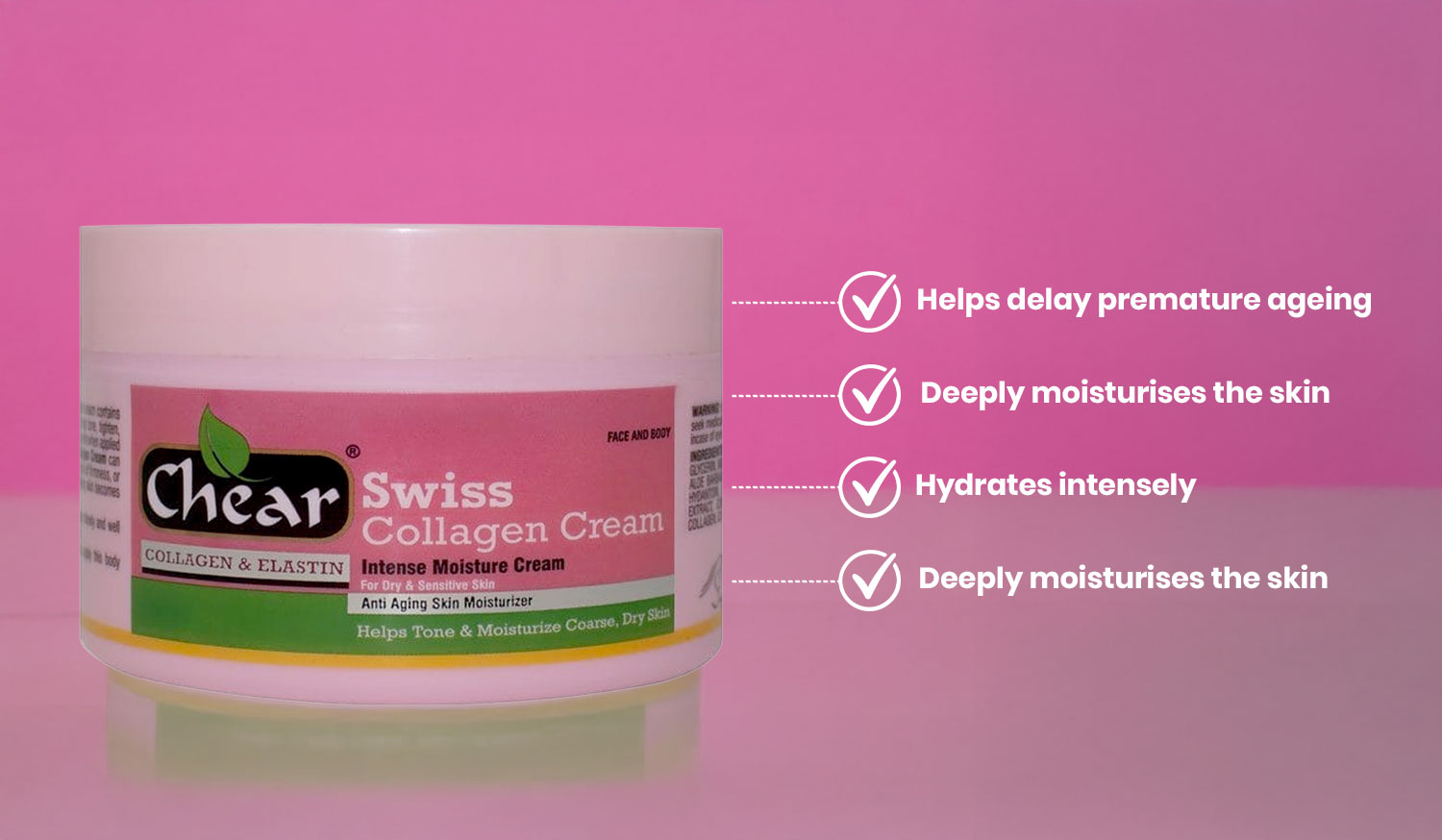
To harness these benefits, consider Chear Collagen Moisturising Cream, a collagen-rich formula designed for daily use. It supports hydration and elasticity, making it perfect for dry, ageing, or stressed skin. Learn more and purchase here.
Prioritising skin moisture at every age is essential for sustaining health and vitality. From addressing natural moisture loss to recognising dehydration signs and embracing consistent moisturisation, the path to resilient skin is clear. Collagen-rich creams elevate this further, offering superior support for challenging conditions. By adopting these evidence-based practices, you can achieve lasting radiance. Remember, healthy skin is an investment in your overall well-being.



Chear Beauty @ Sonik Products Ltd | Company No: 3184821
Chear Beauty @ Sonik Products Ltd, Block C, Woodside End, Wembley Alperton, Middlesex HA0 1UR
No results found. Please try another keyword.
| Subtotal | £0.00 |
|---|---|
| Total | £0.00 |
Don't have an account yet? Sign up for free
Please enter your username or email address. You will receive a link to create a new password via email. Remember now? Back to login
Already have an account? Log in